In this blog I would like to discuss how brave Canadian immigrants, as well as immigrants everywhere else really are. First of all, these courageous people must take the step in applying to immigrate to our country. If they are accepted, this likely requires leaving their family for a period of time, as well as leaving their friends, and ultimately, their home land. This seems like an easy thing to do, seeing as how they are getting what they want by moving to Canada, but it is impossible to know how hard it really is without ever having been there. If I leave home for only a week, I know how much I miss my family, friends, and my home already. I cannot imagine leaving behind those who matter the most to me for so long, and leaving my home behind for good!
Also, once the immigrant is accepted, while struggling to get his or her family immigrated as well, he or she must find employment, and affordable housing in Canada. This is difficult considering he or she may still be trying to support their family back home. For another thing, loneliness is a huge factor for immigrants in this new country (and that's not even considering the extreme culture shock they may be experiencing), and keeping in touch with the family can be difficult and expensive. When money is a strain, you are thousands of miles from home, and one has no company and misses their loved ones, it is a recipe for depression. This is excluding the fact that there may be language barriers and other obstacles such as prejudice and judgement faced by the immigrant. I also read that for immigrants, social support and employment status were taken as independent variables in a study, whereas depression and physical symptoms were dependent variables, which are uncontrollable. (Schwarzer, 1994).
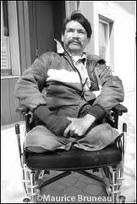
As I was saying, immigrants must face many judgments and prejudices due to the society we live in today. This is terribly unfortunate because Canada is supposed to be proud of our multiculturalism and be supportive of all the cultures that make up our “Cultural Mosaic.” This mosaic basically means that, “...ethnic groups have maintained their distinctiveness while functioning as part of the whole...” (Palmer, 1976). However, it seems that in the present, so many obstacles are faced daily by immigrants. They are already very much left out of many community events because of the prejudices that people have. It certainly is made much worse if that immigrant or refugee has a physical disability because for these people too, judgement is something faced each day. If we take my recipe for depression from before and then add a disability to the life of this lonely immigrant, we have a very distressing life. If it was not hard enough already for these immigrants, if they have a physical impairment they are practically ignored.
References:
Schwarzer, R., Hahn, A., Fuchs, R. (1994). Unemployment, social resources, and mental and physical health: A three-wave study on men and women in a stressful life transition. Job stress in a changing workforce: Investigating gender, diversity, and family issues. pp. 75-87. Washington, DC, US: American Psychological Association. pp. 345.